Decantar a blockchain: explorar o real potencial com o setor tradicional - André Soares Campos
ETHPorto·Mon, Oct 9, 2023, 12:00 AM
Speaker
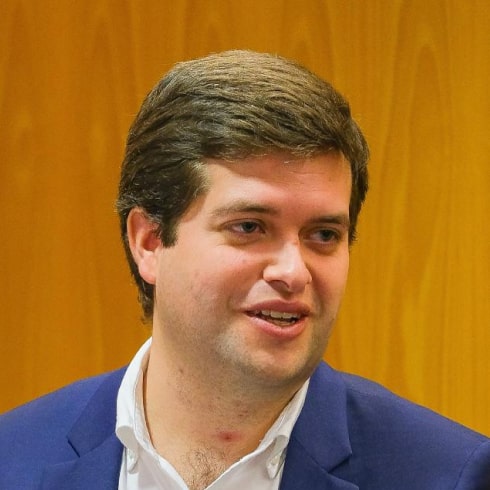
André Soares Campos Decantar a blockchain: explorar o real potencial com o setor tradicional
Transcript
[Laughter] [Music] I'm responsible for the strategy and innovation department, and it's more under the umbrella of innovation that I'm speaking to you today. Seriously, first of all, I want to thank the organization for this invitation, with special thanks to Mário. And so, when we were interested in this invitation, we were putting ourselves in the most uncomfortable zone possible: a traditional company with 80 years of experience, talking about a forum on blockchain and blockchain. It was extreme what we could add. We thought, in fact, we could add something here in this forum.
Certainly, we wo n't talk about technology because 99% of the people here probably know much more than we do, but then we thought, in fact, we have projects that use blockchain. We've discussed this for a long time; we had to go through an internal convincing process. What happens in your company, many schools, about this technology, and we thought that sharing this experience would be the most interesting thing. Ah, we could bring up the topic here. Before I talk to you about the topic, I'll introduce you a little about the company, how each blue was white.
It 's the largest producer of wines in Portugal. It has a presence in more 12 countries, five of which are computers, we have a winery in Argentina, Chile, Spain, and New Zealand. But above all, we are defining Sagra as a house of brands, a house of friends, because that is what distinguishes us from the vast majority of wine producers, thousands in Portugal and in the world. Ah, also for that reason, what distinguishes Sagra, what makes it in fact the largest Portuguese, and to have been growing for 80 years, the fact of the strength of its brands, Sagra started 80 years ago with Mateus. Mateus Rosa is probably the innovation movement.
Ah, one of the greatest innovation movements in the Portuguese business sector, 1942, in the middle of the Second World War, and there is a gentleman who remembers to make a rosé wine at a time when you only saw twenty-something little white wines in a bottle, different from all the others, at a time when only that traditional bottle called Bordeaux was used, to make a bottle in the shape of the soldiers' canteens, aimed at an external market and not an internal market, at a time when Portugal was under a dictatorship and therefore. As we 're saying internally, everything seemed wrong for it to work out, and it did. In fact, it's a wine that today sells more than 20 million bottles worldwide in 120 countries. This is to make sense of this because innovation is always present, with its ups and downs, but it's part of our DNA. We always strive to be at the forefront of the industry, whether with new products, new packaging, or new technologies throughout our careers.
And here's where we also have many other brands. We also have many other brands that many of you, some of you, will have the opportunity to visit yesterday. I hope you enjoyed it. Then we have the old brand, which is the most iconic wine in Portugal for its quality. It was first created in 1953, so it's a huge portfolio.
And that's what brings us the responsibility we have in the sector today, on a global level. Because trying to draw an analogy with the wine sector, which is always a very attractive sector, the idea of trying is precisely what we, as the Innovation team, have to do in relation to these technologies. This is a third gateway for many ideas and technologies within the organization, and therefore we have this responsibility to translate more complex technologies for a board of directors with an average age of over 50, whose concern is ensuring that the grapes are the best, that the winemaking process is what will produce the best wine, that they have to worry about 120 markets, that they have to create these brands and continue to strengthen them, keep them current, even brands that are 80 years old. Therefore, the last thing they'll worry about is understanding what blockchain is, how it's useful for our business, what meta-business is, what virtual reality is, but simulating all these topics, but they are very complex and on their own would probably give an administrator, an organizational position, but that's not possible yet, not even in other areas. Therefore, this is one of the main roles of the Innovation team, which is to receive, evaluate, ask the right questions, and then present it in a simplified way internally.
That's why I think this is very similar to what is done in other areas. Singing is nothing more than separating the lees from a liquid that we want to see. What makes wine good wine, using a Portuguese expression, is separating the wheat from the chaff, and that's why we use this expression because we think that's what we do. That's what I was saying. In other words, every day more than ever, the company is bombarded with consultants, with people who listened to a podcast and thought that this idea, this technology, is interesting, but at the end of the day, the blocks have one more theme, one more technology in the middle, many others.
This is not exhaustive at all. Then, in addition to the technologies and methodologies, we have all sorts of new ideas, a wealth of new ideas that we don't have time to address at the moment. We don't have time for even 10%, oh, probably only 10% has real utility, and that's why at the end of the day we have our board confused, our rights confused, and we have to work on simplifying the block full of things. From our experience, this process of persuasion has a complexity, it has several additional complexities. One of them is this association with cryptocurrencies and all the volatility.
A manager who seems to want everything but relativity wants to take a business away, so when I talk about block blocking, think of Bitcoin, think three or four steps ahead, it's no longer cryptocurrency, even Bitcoin, because that's what you heard, and you heard it was falling, and so it immediately makes the conversation difficult. You have to start a conversation there, but that's not it. Ah, it's an additional difficulty because of the information. That is, when we sell the idea that block blocking has one of the great advantages of information integrity, even if it comes from the source. And it comes when we say that we will have traceability, the whole process, that we can guarantee that the inputs are not manual, and from then on the integrity is highly questionable because otherwise we will discredit one of the first projects.
Two years ago, in the block blocking project, it was a consultancy that presented it to us, and it came very much in the logic of "Let's show the consumer where this bottle came from in the vineyard," isn't that right? It's not possible to do it at this moment in a 100% value chain way, that's our dream, let's talk. That's in the end, but not at this moment. I don't yet have a robot, a sensual machine, that can guarantee me why that grape arrived in that bottle without someone writing it down. If someone else writes it down, from then on I ca n't say I'm giving, I'm taking away the real value, the value of the technology in this case, which is, ah, its legitimacy of the information.
That's the great value, quite an apology. Either we do things well, or someone trains us, because people are intelligent, aren't they? And if we're not sure of what we're doing, we can kill future projects, and thus, with more sustainability, for example, a complex technology, as you know, and the terminology that exists in this technology is very different from normal [Music], etc., etc., and so this becomes very difficult to explain.
When it was difficult, they explained it. The only thing that's certain is that it's very difficult to understand. So, another complexity we have here, and finally, related to the first, the confusion between the technology itself and its uses. Ah, it has modified coexistence so much. This makes us have a set of questions defined in various projects.
We're talking about projects within the company that come with ideas and guarantee the respective value for its brand, for the family that owns the company, and that's why we have to do things well. The first risk we feel is that we're not updating technology without purpose; it makes little sense to me. That was the analogy with wine. Logically, I 'm using a block without... I don't know if there's anything like taking a good wine, a great wine, and 25 (which is good) with an excellent one, and I'm going to take it to the beach on a summer afternoon.
I'm going to spoil the wine. I'm going to open the government anyway, but maybe even making this video isn't good because it wasn't at the right time, it wasn't with the right purpose. And that's why this is the importance of choosing something that makes sense and that isn't just using technology for its own sake. Because this happened a lot, especially two years ago when they started launching, just to say they were the first Portuguese wine or the first international wine. Oh, she pulled NFC.
But why? What was the... What I was trying to resolve for my consumer, despite the sound of technology, is interesting when we're talking about technologies in the core business. When we're talking about a more adjacent technology that adds value but isn't directly related to how I produce my wines, in our case it's the same as opening a bottle here. In fact, very good bottles, very good wines that benefit from their aging time.
And here we also believe that having some maturity in technology brings us advantages in ensuring correct and useful use, above all, for your business, for the organization. Then here's the dissociation of technology from the core business, that is, almost like launching, as we've seen with a work of art in the NFT (New Food Technology) process, with a wine. But what is the relationship of this with wine? Does wine need a work of art to be sold? Why don't I sell the work of art separately from the wine?
And I've come to see how I currently sell it. This dissociation also appears in many projects, either because it's not interesting or because it moves forward at a certain point. To realize that it's a distraction, and not something that makes us better serve the consumers of our wine. Oh, and finally, choosing the right technological partner is also something that worries us a lot. And this is probably the easiest analogy with wine: when we buy wine, we do n't worry about knowing how it's produced in the whole process.
I'm asking you, what are the steps? I mean, picking the grapes, then the wine ferments, then it's bottled, from picking the grapes to the fermenting process, and after fermentation until bottling, there's a whole process where the winemaker has to develop a set of chemical processes that guarantee that the wine, after 10 or 20 years, has quality that we honestly don't know or care about. Because if we had that with all products, whether food or everything we consume, we wouldn't have the mental space or the time, and I think things would even lose their appeal. And here it's the same thing; I'm less interested in knowing how the technology works. And so, in what doesn't really matter, but for that I have to have confidence in how this works and have someone who understands the same thing.
When I buy a wine by brand, and when I buy a wine by brand, I know that the quality is there. When I buy an old brand, I know all the editions, that has a quality and importance of the brands, in this case, of a company that gives us confidence and isn't just another consultant who shows up and sends an email. The Track Tracker, in fact, is very important for us when we choose the partners we choose for our projects. So, summarizing what I was saying before, but on the positive side, when we have the wine, in fact, the questions we have to have answered are: what is this, passing here what is like a pie in the rough? Look, what we, at least, we look at is: what problem am I going to solve for my client?
And sometimes the client can be an entire entity, it can be my distributor, they are my main clients, and in the end it can also be my consumer. After all, the client needs to understand the technology; if so, that's already a sign, a first step. Flake network, but yes, he understands, I'll have to give a very long explanation here. We feel that the best solutions, the best projects that appear to us, and that are the ones we've captured to develop, are those where the technology serves a purpose. But ideally, I don't even have to tell the client what technology is behind it; I have to say that it will allow them to trade, even liquidity, not assets, for example, using NFTs, but I don't have to say it's an NFT.
And what blockchain is behind it? Because otherwise, I'll alienate a large part of my consumers, which are traditional consumers. So, ideally, I'm able to bring this technology to the traditional consumer without them feeling discomfort. And finally, I'm using this technology to improve the business, and very much related to what I explained before, trust in my technology partner is critical; otherwise, it goes wrong. This isn't just about blocks; it's about all the development we do at the digital level.
There are some projects in the sector that use the technology, mainly in two large blocks: one very much at the level of DFT marketplaces that represent bottles, with some diversifications or They represent parts of bottles, others, I know, wine clubs, ah, there's also the sale of NFTs of wines in... Oops, follow me, that's an example, I'm not sure if I answered those four questions, it's the first Portuguese wine with NFT, in fact, it had the advantage of being the first, it was a high-value event, in fact, the 10 NFTs that were placed in their little box were bought, and here's one of the associations, which is my consumer base, which is what I 'm bringing, adding value to my consumer, ah, that worries us and that sometimes makes us take longer consciously, uh, versus, ah, doing a basic thing, because it didn't solve just being grateful, it has a long-term logic and therefore doesn't live off those base moments, and I think most companies do n't, and that's one of the biggest concerns, because there are already a set of projects working at that level, like we have IBM and the item in this project which is the blockchain, there are several... Ah, and I think that in fact there is enormous value, there is also an enormous difficulty against the NFT Marketplace, they are already... Much more solid, ah, in terms of two, Sabina, and no, and that's how I end, which is what we have as our project, ah, mental, as our guide. This isn't one project.
These are dozens of internal projects, projects of working with a lot, with a startup ecosystem and also university projects to develop many solutions that will build this ecosystem, and also an investment arm that is only grateful to have startups that we believe can be accelerators of this micro-enterprise. We have mentally that is to have the value chain fully automated, fully automated. It doesn't mean without humans, it means at least having sensors, having robotization that solves not only a problem of workforce, forgetting also the repetition, for a matter of work that respects the human being, that is not repetitive, less and less. We believe that these are the future of human work. For this, we also have programs of...
elements, or in a matter of making it clear that we don't want to have no people, we want to have people who are increasingly qualified and who can use increasingly automated processes, so that we can have the process working each... More and more alone with the EAI and then yes, we believe that we can have, ah, the blockchain, ah, mapping the whole process. We believe that one day we will be able to tell the consumer that this bottle came from this vineyard without time, without nuts, without having to trust the word, although they can trust it, it's 100%. Ah, we think the advantage is, ah, it's the technology that says it, and this trust. This will take years.
Ah, we already have the process part, ah, much more advanced than others, but this is what we work for, and it is in this logic that we see a great utility of blockchain for the sector, and I pass the money because it's blockchain. The question I get asked internally when we present a project is, is that it's not a digital certificate instead of an NFT? And the answer again is, it's very, very simple: it's because it's a digital certificate. But it has liquidity, and in fact, it's guaranteed to be the only one that wasn't just serious, that made a mess, it wasn't, it didn't issue a digital certificate, it doesn't even know the standard in terms of giving you and digital security, so the NFT is nothing more than the sales that we We've been doing this for 70 or 80 years, selling bottles directly to consumers. But instead of a piece of paper, it's something much more reliable and liquid, and that's the advantage of NFT (Not From Source).
Why? Because we're going to generate interest, and this is very much linked to the previous slide because it 's actually the most reliable way to show the consumer where it comes from, what they're seeing, what's inside. And consumers are becoming more demanding, wanting to know more and more. We want to be more transparent about what we're giving people. Thank you above all for any questions.
If you have any, but could you think you have a project that could fit into this plan that we're presenting to you? Please feel free to talk to me outside, send me a message via the link. Sara is here, and this one is also from the innovation team. And we are very willing to have more and more people collaborating with us on this plan. Thank you.
[Laughter] [Music]
Automatic transcript — names and jargon may be misspelled.